
Guide to Schools: for parents and whānau
About this resource:
This guide is for parents and whānau. It talks about what really matters in schools and the important role you play in your child’s education. We explain how ERO reports can be useful, give tips for asking questions, share options for raising concerns, and link you to other useful resources.
Read Online
About this guide
This guide is for parents and whānau. It talks about what really matters in schools and the important role you play in your child’s education. We explain how ERO reports can be useful, give tips for asking questions, share options for raising concerns, and link you to other useful resources.
Why has ERO put out this guide?
At ERO we focus on what the evidence says about good education: what works well and what doesn’t. We put out this guide to help parents and whānau understand what really matters in schools and the important role you play in your child’s education.
- The evidence is clear about the 14 areas of school that matter the most for students to learn and thrive. We think you should know what these are.
- Your decisions about school and involvement in the school makes a big difference to your child’s learning. We think you should know how to find out about the quality of your child’s school, and how to ask good questions when you visit.
Who is this guide for?
This guide is for parents and whānau of children who go to school1 – or who are about to start going to school. It will be helpful whether you want to find out about a new school or want to learn more about the school your child already attends
What is in each section of this guide?
What Matters most in a school - The 14 key areas that make the most difference, why these are important for parents and whānau to know about, and some common myths and misunderstandings.
ERO's School Reports - Where to find our reports, what’s included in the reports, and how we review schools.
Visiting a school and asking questions - Advice on arranging visits, and ideas for questions to ask and things to look out for.
What can i do if i'm concerned? - Advice and options for raising concerns about teaching, learning, or wellbeing at a school.
Useful resources - Links that could be helpful for parents and whānau.
Who is ERO?
ERO is the Education Review Office. We are the government agency that reviews the quality of education in schools across New Zealand.
After we review your child’s school, we publish a report. Our reports show how well your child’s school is doing in the areas that matter most – things like student progress and achievement, attendance, student engagement and belonging, quality of teaching and leadership, quality of te reo Māori provision if the school has an immersion unit, and health and safety.
ERO is different from the Ministry of Education. The Ministry is a very large agency that has a role in legislation, funding, curriculum, and support for schools. ERO is independent from the Ministry, and focuses on reviewing and reporting on education quality in schools.
This guide is for parents and whānau. It talks about what really matters in schools and the important role you play in your child’s education. We explain how ERO reports can be useful, give tips for asking questions, share options for raising concerns, and link you to other useful resources.
Why has ERO put out this guide?
At ERO we focus on what the evidence says about good education: what works well and what doesn’t. We put out this guide to help parents and whānau understand what really matters in schools and the important role you play in your child’s education.
- The evidence is clear about the 14 areas of school that matter the most for students to learn and thrive. We think you should know what these are.
- Your decisions about school and involvement in the school makes a big difference to your child’s learning. We think you should know how to find out about the quality of your child’s school, and how to ask good questions when you visit.
Who is this guide for?
This guide is for parents and whānau of children who go to school1 – or who are about to start going to school. It will be helpful whether you want to find out about a new school or want to learn more about the school your child already attends
What is in each section of this guide?
What Matters most in a school - The 14 key areas that make the most difference, why these are important for parents and whānau to know about, and some common myths and misunderstandings.
ERO's School Reports - Where to find our reports, what’s included in the reports, and how we review schools.
Visiting a school and asking questions - Advice on arranging visits, and ideas for questions to ask and things to look out for.
What can i do if i'm concerned? - Advice and options for raising concerns about teaching, learning, or wellbeing at a school.
Useful resources - Links that could be helpful for parents and whānau.
Who is ERO?
ERO is the Education Review Office. We are the government agency that reviews the quality of education in schools across New Zealand.
After we review your child’s school, we publish a report. Our reports show how well your child’s school is doing in the areas that matter most – things like student progress and achievement, attendance, student engagement and belonging, quality of teaching and leadership, quality of te reo Māori provision if the school has an immersion unit, and health and safety.
ERO is different from the Ministry of Education. The Ministry is a very large agency that has a role in legislation, funding, curriculum, and support for schools. ERO is independent from the Ministry, and focuses on reviewing and reporting on education quality in schools.
What matters most in a school?
The things that students and parents expect and need from schools has changed over time and is different for different families. You will bring your own experiences and ideas about school, and people around you might have views too.
It is ERO’s job to know what good helpful education looks like. We base this on reliable, up-to-date, robust evidence. In this section, we share the 14 key areas that matter most in a school for its students to have good outcomes.
There are 14 key areas that matter most in a school
The information below shows the 14 most important things to understand about a school.
These are based on robust evidence.
- Different families and whānau will value some areas more than others. For example, if your child has experienced bullying, the ‘engagement and belonging’ area might be a top priority for you.
Student outcomes
Student Achievement
Why is this area important for parents and whānau to know about?
- Student achievement rates show parents and whānau an important part of the picture, about whether teaching and learning is going well at the school.
- They can provide an overall picture of how well students at the school are achieving against curriculum levels or in national qualifications.
What does this area look like when it’s good?
- High student achievement across a school means that most students have done the learning that they’ll need for the next stage.
- Achievement rates are usually based on students’ age and
year level, and whether their achievement (like passing
a reading level or a formal assessment like an exam) match their stage of schooling.
- Achievement rates won’t be perfect – some students will be working hard with their teachers to catch up, and others will be learning at a different level than their peers.
Tip: achievement rates are useful to know about, but they won’t tell you everything. Progress information, and equity information, helps to complete the picture.
Student progress
Why is this area important for parents and whānau to know about?
- Knowing about students’ progress over time tells parents and
whānau whether the school does a good job of making a difference.
- Progress is a better way to tell whether teaching is good, than achievement rates alone. This is because progress is about how much learning each student makes from their starting point.
- It’s normal for your child to need extra help sometimes. When this happens, it’s important that teachers know how to help students
make the progress they need.
What does this area look like when it’s good?
- Students at the school are learning from their teachers and getting better all the time. Assessment data collected by teachers shows that over time, students understand more, know more, and can do more.
- It is expected that every student would make one year’s progress within one year at school.
- Teachers also work with some students to ‘accelerate’ their progress – an extra boost of focused teaching that helps students catch up to expected levels for their age and stage.
Reading and writing, and foundational literacy
Why is this area important for parents and whānau to know about?
- Reading and writing are core skills, that your child will need for other learning areas and throughout their life.
- Reading and writing help us to understand information, communicate ideas, and participate in learning, work, and everyday life.
What does this area look like when it’s good?
- There are good rates of progress and achievement in the core
subjects of reading and writing – things like primary students reading confidently, and writing using relevant details and
examples in secondary school.
- In schools with reo rua or rumaki, there are good rates of progress and achievement in pānui and tuhituhi.
Mathematics (maths), and foundational numeracy
Why is this area important for parents and whānau to know about?
- Maths is a core skill, that your child will need for other learning areas and throughout their life.
- Maths helps problem solving and reasoning skills that are essential for everyday life, further learning, and informed decision making.
What does this area look like when it’s good?
- There are good rates of progress and achievement in maths things like learning about and understanding fractions for primary students or working through complex mathematical problems independently in secondary school.
Attendance
Why is this area important for parents and whānau to know about?
- Missing even a few classes makes a big difference to your child’s learning and their later life. Good schools know this and take action to keep students engaged and keen to attend.
- Even a few days off each term can disrupt learning over time, leading to gaps in understanding lower engagement and achievement.
What does this area look like when it’s good?
- The school’s attendance rates are good, or getting better over time,2 because they have good strategies to encourage students to attend every class, every day.
- Schools and school boards look closely at their ‘regular attendance’ rates. Regular attendance means that a student is at school 90% of the time over a school term.
Engagement and belonging
Why is this area important for parents and whānau to know about?
- Learning improves when students feel like they belong. They feel connected, motivated and supported.
- When a school has a deliberate, positive culture, and students feel like they belong, this helps them learn and feel good about their lives.
What does this area look like when it’s good?
- The school finds ways to motivate students in their learning, and to want to come to school. The school helps students to get on well with people around them and feel good about themselves.
- The school works with parents and students to address any issues of bullying or inclusion quickly.
Equity
Why is this area important for parents and whānau to know about?
- Equity is about making sure everyone has a fair opportunity to succeed.
- Differences in student achievement or school attendance highlight to parents and whānau that certain groups of students are not receiving the support they need to learn and thrive at school.
- Good schools are alert and deliberate about preventing
and responding to inequities. This shows that they have high expectations and care about all their students and their futures.
What does this area look like when it’s good?
- Leaders and the school board look carefully at progress and achievement across different groups and use evidence-based strategies to respond to inequities and reduce barriers to educational success.
- The school makes sure that there aren’t any groups of students that are not doing as well as others. They have high expectations for all of their students.
What the school does
Leadership
Why is this area important for parents and whānau to know about?
- Good (or not so good) leadership has a big influence on the quality of a school.
- Knowing about the quality of leadership will give parents and whānau an idea of how well setup the school is to support
their child.
What does this area look like when it’s good?
- The principal and other school leaders have a clear sense of direction for the school. They make sure that teachers are on the same page and are well supported to be great teachers.
- Good leaders prioritise: they focus on the right work to continually improve outcomes for their staff, students and school community.
Teaching
Why is this area important for parents and whānau to know about?
- When teaching is good quality, students learn and achieve more. They are also more interested in, engaged and focused on their learning and achievement.
- They are more likely to attend, stay at school longer and
have positive learning-based relationships with their teachers that set them up for success.
What does this area look like when it’s good?
- Teachers at the school help students to make progress and achieve. They use strategies and tools that are based on good, up-to-date evidence about what works best for students. Students will be able to talk about and share their learning.
- Quality teaching is important because it is a powerful influence on students’ learning and engagement, as well as how long they stay in education.
Curriculum
Why is this area important for parents and whānau to know about?
- The curriculum is the planned learning that happens at school. It sets out what students learn, why it is important, and how learning is taught.
- When curriculum and teaching aren’t great, your child might get bored, frustrated, and or unmotivated to learn.
- It can also a worrying sign for parents and whānau that the school isn’t up to date on what good quality looks like.
What does this area look like when it’s good?
- What is taught in classrooms meets legal requirements and is based on good evidence about what works best for students.
- It’s clear about the knowledge, skills, and values students are expected to learn in each learning areas or subject.
- In reo rua or rumaki units, the school makes sure high quality teaching and learning is happening, through the provision of te reo Māori.
- In the senior years, the curriculum provides pathways and options for beyond school.
Assessment
Why is this area important for parents and whānau to know about?
- Assessment information will tell parents and whānau whether your child’s learning is going well and how well they are progressing in their learning.
- Good assessment also helps teachers to quickly spot when your child needs extra support and offers support before it becomes a bigger gap.
- Standardised test results can be helpful because they provide consistent information about student learning across schools and the school system.
What does this area look like when it’s good?
- Teachers know how to use different assessments to check that their teaching is working well for students and to show them where to focus their teaching next. There is a range of assessment used, including regular check in assessments and some standardised tests.
Provision for students with additional needs
(‘Additional needs’ means needing extra help at school due to
learning, behaviour, or communication challenges.)
Why is this area important for parents and whānau to know about?
- For parents and whānau of students with additional needs, this area tells you whether your child will be well-supported to make good progress and be included alongside their peers.
- For other parents and whānau, this area of a school can give you a sense of the strength and quality of leadership, evidence-based teacher practice, behaviour and school values and culture, and the school’s connectedness with education networks.
What does this area look like when it’s good?
- There are services and resources at the school to support students with additional needs. This might include specialised resources that help students learn, good processes for working alongside parents and whānau, or access to specialists like Occupational Therapists.
- Teachers are well-supported to work well with these students.
This might include specialist training, dedicated staff that work alongside teachers, evidence-based ways of adapting schoolwork, or special assessment tools. Teacher aides aren’t used in an old-fashioned way where they spend all their time with one student. (For more about this, click here: P guide on TAs)
School improvement
Why is this area important for parents and whānau to know about?
- All schools have areas where they can improve. It’s useful to know what the school is working on and how they’re doing that. This builds trust, accountability, and confidence that the school is moving forward and staying up to date.
What does this area look like when it’s good?
- The school and the school board regularly identify areas for improvement, based on evidence they collect. They set plans, goals, and targets to help them stay on track and to know when they have met their improvement goals.
Governance and the school board
Why is this area important for parents and whānau to know about?
- School boards are groups of people elected by the community, students, and staff. The school principal is also a member.
- The quality of the board matters because the board sets the policies for how a school runs, sets the school’s strategic direction, and influences quality, relationships, and important decisions (like the budget).
What does this area look like when it’s good?
- The school board functions well and knows its roles and responsibilities. It has a long-term plan for improving the school, keeping the buildings safe and looking good, and using data to make decisions about progress, attendance, and the wellbeing of students and staff.
- The school board and school leadership work alongside the community to develop their strategic plan, using feedback from parents and whānau.
Where did these 14 areas come from?
Because getting a good education is so important for a good life, a lot of research has been done about what works well and what doesn’t, all over the world. ERO has always looked across the evidence from New Zealand and overseas, and worked with education experts to ensure we are updating these key areas for most recent evidence. This is how we make sure that we focus our work on the areas that really matter, for New Zealand’s students.
Why are reading, writing, and mathematics more important than other subjects?
These subjects are very important because they help with all other areas of learning too. For example, reading about the design process, writing about world history, or using maths equations in a science experiment.
New to New Zealand? School boards might be new to you
Our schools are governed a bit differently from other countries – each of them has a school board, which is a group of elected parents and community members making key decisions about the strategic direction of the school. This link might be useful: Become a board member | School Board Elections
The things that students and parents expect and need from schools has changed over time and is different for different families. You will bring your own experiences and ideas about school, and people around you might have views too.
It is ERO’s job to know what good helpful education looks like. We base this on reliable, up-to-date, robust evidence. In this section, we share the 14 key areas that matter most in a school for its students to have good outcomes.
There are 14 key areas that matter most in a school
The information below shows the 14 most important things to understand about a school.
These are based on robust evidence.
- Different families and whānau will value some areas more than others. For example, if your child has experienced bullying, the ‘engagement and belonging’ area might be a top priority for you.
Student outcomes
Student Achievement
Why is this area important for parents and whānau to know about?
- Student achievement rates show parents and whānau an important part of the picture, about whether teaching and learning is going well at the school.
- They can provide an overall picture of how well students at the school are achieving against curriculum levels or in national qualifications.
What does this area look like when it’s good?
- High student achievement across a school means that most students have done the learning that they’ll need for the next stage.
- Achievement rates are usually based on students’ age and
year level, and whether their achievement (like passing
a reading level or a formal assessment like an exam) match their stage of schooling.
- Achievement rates won’t be perfect – some students will be working hard with their teachers to catch up, and others will be learning at a different level than their peers.
Tip: achievement rates are useful to know about, but they won’t tell you everything. Progress information, and equity information, helps to complete the picture.
Student progress
Why is this area important for parents and whānau to know about?
- Knowing about students’ progress over time tells parents and
whānau whether the school does a good job of making a difference.
- Progress is a better way to tell whether teaching is good, than achievement rates alone. This is because progress is about how much learning each student makes from their starting point.
- It’s normal for your child to need extra help sometimes. When this happens, it’s important that teachers know how to help students
make the progress they need.
What does this area look like when it’s good?
- Students at the school are learning from their teachers and getting better all the time. Assessment data collected by teachers shows that over time, students understand more, know more, and can do more.
- It is expected that every student would make one year’s progress within one year at school.
- Teachers also work with some students to ‘accelerate’ their progress – an extra boost of focused teaching that helps students catch up to expected levels for their age and stage.
Reading and writing, and foundational literacy
Why is this area important for parents and whānau to know about?
- Reading and writing are core skills, that your child will need for other learning areas and throughout their life.
- Reading and writing help us to understand information, communicate ideas, and participate in learning, work, and everyday life.
What does this area look like when it’s good?
- There are good rates of progress and achievement in the core
subjects of reading and writing – things like primary students reading confidently, and writing using relevant details and
examples in secondary school.
- In schools with reo rua or rumaki, there are good rates of progress and achievement in pānui and tuhituhi.
Mathematics (maths), and foundational numeracy
Why is this area important for parents and whānau to know about?
- Maths is a core skill, that your child will need for other learning areas and throughout their life.
- Maths helps problem solving and reasoning skills that are essential for everyday life, further learning, and informed decision making.
What does this area look like when it’s good?
- There are good rates of progress and achievement in maths things like learning about and understanding fractions for primary students or working through complex mathematical problems independently in secondary school.
Attendance
Why is this area important for parents and whānau to know about?
- Missing even a few classes makes a big difference to your child’s learning and their later life. Good schools know this and take action to keep students engaged and keen to attend.
- Even a few days off each term can disrupt learning over time, leading to gaps in understanding lower engagement and achievement.
What does this area look like when it’s good?
- The school’s attendance rates are good, or getting better over time,2 because they have good strategies to encourage students to attend every class, every day.
- Schools and school boards look closely at their ‘regular attendance’ rates. Regular attendance means that a student is at school 90% of the time over a school term.
Engagement and belonging
Why is this area important for parents and whānau to know about?
- Learning improves when students feel like they belong. They feel connected, motivated and supported.
- When a school has a deliberate, positive culture, and students feel like they belong, this helps them learn and feel good about their lives.
What does this area look like when it’s good?
- The school finds ways to motivate students in their learning, and to want to come to school. The school helps students to get on well with people around them and feel good about themselves.
- The school works with parents and students to address any issues of bullying or inclusion quickly.
Equity
Why is this area important for parents and whānau to know about?
- Equity is about making sure everyone has a fair opportunity to succeed.
- Differences in student achievement or school attendance highlight to parents and whānau that certain groups of students are not receiving the support they need to learn and thrive at school.
- Good schools are alert and deliberate about preventing
and responding to inequities. This shows that they have high expectations and care about all their students and their futures.
What does this area look like when it’s good?
- Leaders and the school board look carefully at progress and achievement across different groups and use evidence-based strategies to respond to inequities and reduce barriers to educational success.
- The school makes sure that there aren’t any groups of students that are not doing as well as others. They have high expectations for all of their students.
What the school does
Leadership
Why is this area important for parents and whānau to know about?
- Good (or not so good) leadership has a big influence on the quality of a school.
- Knowing about the quality of leadership will give parents and whānau an idea of how well setup the school is to support
their child.
What does this area look like when it’s good?
- The principal and other school leaders have a clear sense of direction for the school. They make sure that teachers are on the same page and are well supported to be great teachers.
- Good leaders prioritise: they focus on the right work to continually improve outcomes for their staff, students and school community.
Teaching
Why is this area important for parents and whānau to know about?
- When teaching is good quality, students learn and achieve more. They are also more interested in, engaged and focused on their learning and achievement.
- They are more likely to attend, stay at school longer and
have positive learning-based relationships with their teachers that set them up for success.
What does this area look like when it’s good?
- Teachers at the school help students to make progress and achieve. They use strategies and tools that are based on good, up-to-date evidence about what works best for students. Students will be able to talk about and share their learning.
- Quality teaching is important because it is a powerful influence on students’ learning and engagement, as well as how long they stay in education.
Curriculum
Why is this area important for parents and whānau to know about?
- The curriculum is the planned learning that happens at school. It sets out what students learn, why it is important, and how learning is taught.
- When curriculum and teaching aren’t great, your child might get bored, frustrated, and or unmotivated to learn.
- It can also a worrying sign for parents and whānau that the school isn’t up to date on what good quality looks like.
What does this area look like when it’s good?
- What is taught in classrooms meets legal requirements and is based on good evidence about what works best for students.
- It’s clear about the knowledge, skills, and values students are expected to learn in each learning areas or subject.
- In reo rua or rumaki units, the school makes sure high quality teaching and learning is happening, through the provision of te reo Māori.
- In the senior years, the curriculum provides pathways and options for beyond school.
Assessment
Why is this area important for parents and whānau to know about?
- Assessment information will tell parents and whānau whether your child’s learning is going well and how well they are progressing in their learning.
- Good assessment also helps teachers to quickly spot when your child needs extra support and offers support before it becomes a bigger gap.
- Standardised test results can be helpful because they provide consistent information about student learning across schools and the school system.
What does this area look like when it’s good?
- Teachers know how to use different assessments to check that their teaching is working well for students and to show them where to focus their teaching next. There is a range of assessment used, including regular check in assessments and some standardised tests.
Provision for students with additional needs
(‘Additional needs’ means needing extra help at school due to
learning, behaviour, or communication challenges.)
Why is this area important for parents and whānau to know about?
- For parents and whānau of students with additional needs, this area tells you whether your child will be well-supported to make good progress and be included alongside their peers.
- For other parents and whānau, this area of a school can give you a sense of the strength and quality of leadership, evidence-based teacher practice, behaviour and school values and culture, and the school’s connectedness with education networks.
What does this area look like when it’s good?
- There are services and resources at the school to support students with additional needs. This might include specialised resources that help students learn, good processes for working alongside parents and whānau, or access to specialists like Occupational Therapists.
- Teachers are well-supported to work well with these students.
This might include specialist training, dedicated staff that work alongside teachers, evidence-based ways of adapting schoolwork, or special assessment tools. Teacher aides aren’t used in an old-fashioned way where they spend all their time with one student. (For more about this, click here: P guide on TAs)
School improvement
Why is this area important for parents and whānau to know about?
- All schools have areas where they can improve. It’s useful to know what the school is working on and how they’re doing that. This builds trust, accountability, and confidence that the school is moving forward and staying up to date.
What does this area look like when it’s good?
- The school and the school board regularly identify areas for improvement, based on evidence they collect. They set plans, goals, and targets to help them stay on track and to know when they have met their improvement goals.
Governance and the school board
Why is this area important for parents and whānau to know about?
- School boards are groups of people elected by the community, students, and staff. The school principal is also a member.
- The quality of the board matters because the board sets the policies for how a school runs, sets the school’s strategic direction, and influences quality, relationships, and important decisions (like the budget).
What does this area look like when it’s good?
- The school board functions well and knows its roles and responsibilities. It has a long-term plan for improving the school, keeping the buildings safe and looking good, and using data to make decisions about progress, attendance, and the wellbeing of students and staff.
- The school board and school leadership work alongside the community to develop their strategic plan, using feedback from parents and whānau.
Where did these 14 areas come from?
Because getting a good education is so important for a good life, a lot of research has been done about what works well and what doesn’t, all over the world. ERO has always looked across the evidence from New Zealand and overseas, and worked with education experts to ensure we are updating these key areas for most recent evidence. This is how we make sure that we focus our work on the areas that really matter, for New Zealand’s students.
Why are reading, writing, and mathematics more important than other subjects?
These subjects are very important because they help with all other areas of learning too. For example, reading about the design process, writing about world history, or using maths equations in a science experiment.
New to New Zealand? School boards might be new to you
Our schools are governed a bit differently from other countries – each of them has a school board, which is a group of elected parents and community members making key decisions about the strategic direction of the school. This link might be useful: Become a board member | School Board Elections
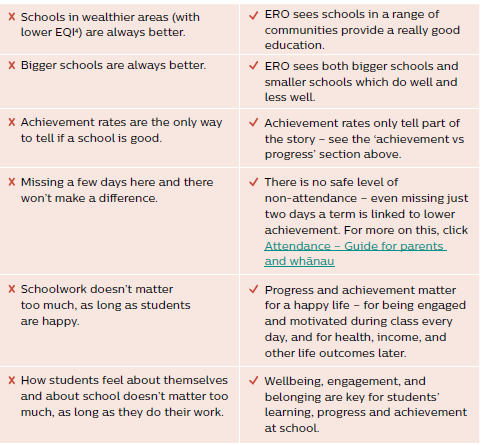
Some common misunderstandings about what matters
Achievement vs progress
Overall achievement rates and statements about achievement can sometimes be unhelpful by themselves. It’s a good idea to look at student achievement AND student progress, to get a better understanding of how much value a school is adding. Here are a couple of examples to show what we mean:
- Amiria can read at a proficient level when she starts Year 7. At the end of the year, she is still reading at the proficient level. Her achievement might look good – proficient is the end-of-year goal. However, the teacher didn’t actually help her to make progress in her reading that year. (A reader who is proficient at the beginning of the year should at least progress to exceeding by the end of the year.)
- Jackson arrives in Year 7 with an emerging level for maths and after a term of focused teaching, he has moved up to developing by Term 2. At first glance, a developing level (his achievement level) might not look good, but Jackson’s impressive progress in only one term shows that teaching was very high-quality.
(This would be described as accelerated progress – it’s more progress than is expected in that time.)
Attendance rates vs attendance strategie
A bit like achievement rates, attendance rates need an extra look. Good schools know that attendance matters for students’ futures, and they do everything they can to keep students engaged and attending every day. Here are a couple of examples to show what we mean
- School A’s regular attendance rate3 is 90%. The school has a lot of students whose families make sure they attend regularly. But some students at School A are very disengaged, often miss class, and are falling far behind in their schoolwork.
- School B has a regular attendance rate of 80%, which isn’t as high as School A. But their attendance rate was only 60% two years ago. Lots of School B’s students used to struggle to come to school. School B developed some very high-quality strategies to follow up on all absences quickly. These strategies have significantly boosted student engagement over the last two years. This is a big success.
Common myths
How can parents and whānau find out about how a school is performing?
There are some reliable ways to find out about the quality of a school. ERO’s School Reports are a great foundation – they give you information about the 14 areas that matter most. Parents and whānau can build on what they read in ERO reports by asking questions and visiting the school. We give practical tips and ideas in the next two sections of this guide.
Some common misunderstandings about what matters
Achievement vs progress
Overall achievement rates and statements about achievement can sometimes be unhelpful by themselves. It’s a good idea to look at student achievement AND student progress, to get a better understanding of how much value a school is adding. Here are a couple of examples to show what we mean:
- Amiria can read at a proficient level when she starts Year 7. At the end of the year, she is still reading at the proficient level. Her achievement might look good – proficient is the end-of-year goal. However, the teacher didn’t actually help her to make progress in her reading that year. (A reader who is proficient at the beginning of the year should at least progress to exceeding by the end of the year.)
- Jackson arrives in Year 7 with an emerging level for maths and after a term of focused teaching, he has moved up to developing by Term 2. At first glance, a developing level (his achievement level) might not look good, but Jackson’s impressive progress in only one term shows that teaching was very high-quality.
(This would be described as accelerated progress – it’s more progress than is expected in that time.)
Attendance rates vs attendance strategie
A bit like achievement rates, attendance rates need an extra look. Good schools know that attendance matters for students’ futures, and they do everything they can to keep students engaged and attending every day. Here are a couple of examples to show what we mean
- School A’s regular attendance rate3 is 90%. The school has a lot of students whose families make sure they attend regularly. But some students at School A are very disengaged, often miss class, and are falling far behind in their schoolwork.
- School B has a regular attendance rate of 80%, which isn’t as high as School A. But their attendance rate was only 60% two years ago. Lots of School B’s students used to struggle to come to school. School B developed some very high-quality strategies to follow up on all absences quickly. These strategies have significantly boosted student engagement over the last two years. This is a big success.
Common myths
How can parents and whānau find out about how a school is performing?
There are some reliable ways to find out about the quality of a school. ERO’s School Reports are a great foundation – they give you information about the 14 areas that matter most. Parents and whānau can build on what they read in ERO reports by asking questions and visiting the school. We give practical tips and ideas in the next two sections of this guide.
ERO's School Reports
Looking at ERO’s School Reports is a reliable way to find out if a school is good. Our reports are based on strong evidence, to give you information about the 14 areas that matter most.
To learn about a school, their ERO report is the best place to start. This is because our reports only talk about what the evidence shows – not what people think or hope about a school. The reports are also strongly focused on the areas of school that matter most for students. Once you know about these areas, you can build on this information to ask good questions and find out more yourself.
Where do I find ERO reports?
Our reports are public for anyone to see. Just go to our website www.ero.govt.nz and search for the name of the school.
We changed what ERO reports look like in 2026
This guide talks about what ERO’s reports look like now – since early 2026. We changed them to be clearer for parents and whānau.
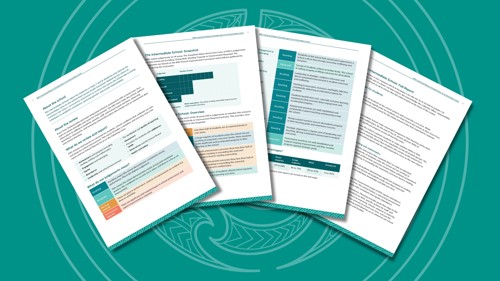
If a school has an older style of ERO report:
- it will still have useful information
- it will look a bit different
- it will talk about a lot of the same things – but they might not be as clearly labelled.
DID YOU KNOW?
ERO’s School Reports aren’t just for looking at a new school.
They’re useful for parents and whānau at any time during their child’s schooling.
We have updated our School Reports to make them more useful for parents and whānau. We’ll be using our new reports for all schools that are visited by ERO from Term 2, 2026 onwards.
What is included in ERO reports?
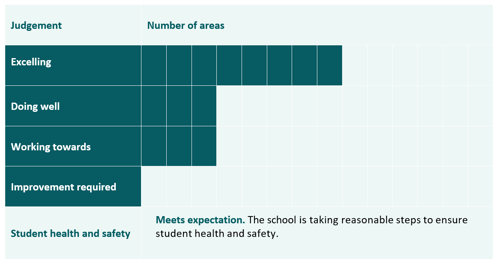
A school report will set out how well the school is doing on 14 different areas. (Or 16, if the school has a bilingual provision.) For each of these areas, there is a clear judgement on a four-point scale. We use clear language and visuals to make things easy to understand.
The report lets you see what is going well and where improvements are needed. This will help you to make choices about your child’s school and to talk to teachers and leaders there. You can also compare how schools are doing on different areas.
The reports have quick information at the front and more detail at the back. They tell you some important context information, like whether the school has a bilingual curriculum or is a special character school. The reports start with a ‘snapshot’ like the example below, and then give more detail about how the school is going in each of the areas.
How does ERO find out how my child’s school is doing?
ERO has a national team of expert school reviewers. Every three or four years, members of the team will visit the school to do a review.
During a review, the ERO team gathers a lot of information. We talk to students, teachers, leaders, the school board, parents and whānau, and more. We observe classes and look at the work students are doing. We look at school documents and data and planning. We use this information to tell us how well the school is going in the areas that matter most for students. We have a strong focus on the progress students are making in their learning.
The ERO team uses the information they gather as evidence about the school’s performance in the 14 areas that matter most. We decide how well the school is doing in each area, on a four-point scale. We discuss those judgements with the school’s leaders, check them over with other ERO staff, and then write it up in a short report.
Does ERO do the next steps themselves?
ERO’s job is to review and report on the school.
After discussing and finalising a school’s report, including the next steps for improvement, ERO sends a copy to the school and puts it on the ERO website.
The school’s leaders and school board are in charge of making the next steps for improvement happen.
If there are bigger concerns, ERO lets the Ministry of Education know about the supports that should be provided to the school. These are written in the school improvement part of the report. The Ministry is in charge of providing the supports.
Other useful websites – Looking for zoning details, how to enrol, school events, policies?
Education Counts
Education Counts is a website run by the Ministry of Education, with a range of information about individual schools.
Tips: Go to the ‘Schools near you’ tab and search for the name of a school, or a location. If the school has zoning rules, this is where you can find it – or the school’s website. You can go to ‘Data Services’ for recent attendance data for a school.
The school website
Most schools in New Zealand have their own school website. You can find it by searching for the name of the school online.
Usually, the school website will have information about the school’s vision and values, names of staff, school history, photos, events like open days, policies, and ways to get in touch.
Looking at ERO’s School Reports is a reliable way to find out if a school is good. Our reports are based on strong evidence, to give you information about the 14 areas that matter most.
To learn about a school, their ERO report is the best place to start. This is because our reports only talk about what the evidence shows – not what people think or hope about a school. The reports are also strongly focused on the areas of school that matter most for students. Once you know about these areas, you can build on this information to ask good questions and find out more yourself.
Where do I find ERO reports?
Our reports are public for anyone to see. Just go to our website www.ero.govt.nz and search for the name of the school.
We changed what ERO reports look like in 2026
This guide talks about what ERO’s reports look like now – since early 2026. We changed them to be clearer for parents and whānau.
If a school has an older style of ERO report:
- it will still have useful information
- it will look a bit different
- it will talk about a lot of the same things – but they might not be as clearly labelled.
DID YOU KNOW?
ERO’s School Reports aren’t just for looking at a new school.
They’re useful for parents and whānau at any time during their child’s schooling.
We have updated our School Reports to make them more useful for parents and whānau. We’ll be using our new reports for all schools that are visited by ERO from Term 2, 2026 onwards.
What is included in ERO reports?
A school report will set out how well the school is doing on 14 different areas. (Or 16, if the school has a bilingual provision.) For each of these areas, there is a clear judgement on a four-point scale. We use clear language and visuals to make things easy to understand.
The report lets you see what is going well and where improvements are needed. This will help you to make choices about your child’s school and to talk to teachers and leaders there. You can also compare how schools are doing on different areas.
The reports have quick information at the front and more detail at the back. They tell you some important context information, like whether the school has a bilingual curriculum or is a special character school. The reports start with a ‘snapshot’ like the example below, and then give more detail about how the school is going in each of the areas.
How does ERO find out how my child’s school is doing?
ERO has a national team of expert school reviewers. Every three or four years, members of the team will visit the school to do a review.
During a review, the ERO team gathers a lot of information. We talk to students, teachers, leaders, the school board, parents and whānau, and more. We observe classes and look at the work students are doing. We look at school documents and data and planning. We use this information to tell us how well the school is going in the areas that matter most for students. We have a strong focus on the progress students are making in their learning.
The ERO team uses the information they gather as evidence about the school’s performance in the 14 areas that matter most. We decide how well the school is doing in each area, on a four-point scale. We discuss those judgements with the school’s leaders, check them over with other ERO staff, and then write it up in a short report.
Does ERO do the next steps themselves?
ERO’s job is to review and report on the school.
After discussing and finalising a school’s report, including the next steps for improvement, ERO sends a copy to the school and puts it on the ERO website.
The school’s leaders and school board are in charge of making the next steps for improvement happen.
If there are bigger concerns, ERO lets the Ministry of Education know about the supports that should be provided to the school. These are written in the school improvement part of the report. The Ministry is in charge of providing the supports.
Other useful websites – Looking for zoning details, how to enrol, school events, policies?
Education Counts
Education Counts is a website run by the Ministry of Education, with a range of information about individual schools.
Tips: Go to the ‘Schools near you’ tab and search for the name of a school, or a location. If the school has zoning rules, this is where you can find it – or the school’s website. You can go to ‘Data Services’ for recent attendance data for a school.
The school website
Most schools in New Zealand have their own school website. You can find it by searching for the name of the school online.
Usually, the school website will have information about the school’s vision and values, names of staff, school history, photos, events like open days, policies, and ways to get in touch.
Visiting the school and asking questions
Parents and whānau can build on what you learn from a school’s ERO report by having a look around the school and talking with staff. This is a great way to learn more about the teaching, learning, and culture there – and to ask specific questions about your child.
In this section, we offer some ideas for useful questions and things to look out for when visiting a school.
Arranging a visit
We asked school leaders and teachers about their top tips for arranging a visit to a new school.
Don’t turn up out of the blue.
— Call or email the school to make a time for them to show you around and have a chat.
— Look at the school website to see if there are open days or evenings coming up.
Do connect with your early learning service about this, if your child attends one. Some early learning services have relationships with local schools, or make arrangements for group visits.
Do think ahead, about the sorts of questions you’d like to ask. (We have lots of ideas below.)
Don’t rely on social media for your information about a school – it’s better to visit.
Do check that your child lives in the school’s zone before visiting – some schools have enrolment rules based on where you live. Call the school or check their website to find out.
It’s okay to ask questions
Some parents and whānau feel worried about asking questions of leaders and teachers, especially if you grew up thinking teachers should not be questioned or come from a place where this is seen as disrespectful to teachers.
It’s okay to ask questions. School leaders and teachers know that students achieve better at school when parents and whānau are actively involved and interested. They are happy to talk to you about what they do at the school and why.
- We talked to some teachers and leaders about how to make sure the conversations are useful, respectful, and set everyone up for success.
Who can you talk to?
This depends on what you’d like to know. Usually, a school leader will be able to answer most questions.
- School leaders will know about how teaching and learning works at the school, and the school’s approach to supporting students to learn and engage. They will also be able to tell you how parents and whānau can get involved and what information they can expect from the school.
- Teachers will know about the progress, achievement, and wellbeing of students. They can answer more specific questions about your child’s learning and achievement.
- Other parents and whānau at the school will know about the school community and culture, and the relationships and information-sharing that happens between school and home.
- The school board will know about big-picture goals that the school is working towards and what the school community is like. Hopefully, they’ll also know about how data (like progress and achievement rates, wellbeing data, and attendance rates) is used to make decisions. School board meetings are open to the public – ask the school about when these are.
Tip: Asking questions at school board meetings
School boards have a collective voice, so if you have questions you’d like to ask them, it’s best to do this at a board meeting rather than ask individual members. Send questions ahead of time so a space can be allocated on the agenda for
the discussion.
What do I ask? Some ideas for parents and whānau
We have short print-outs of just the questions that are useful for when your child is about to start school, when your child is starting a different school, and for when your child is starting secondary school. Download them here: www.evidence.ero.govt.nz
Questions about schoolwork
- What sort of assessment information do parents and whānau receive? Will this be based on a good range of evidence-based assessment tools? Can I see examples of reporting?
- How does the school track progress over time? What would happen if my child isn’t progressing as expected?
- What is in the curriculum? Does it have a solid focus on reading, writing, and mathematics, as well as a good range of science, arts, sports, and other options?
- Are teachers prepared to meet my child’s particular needs and strengths to help them learn – e.g. giftedness, culture and language contexts, learning difficulties, health needs? How do you know? How can I help?
- How does the school help students to see school as important and encourage their attendance in every class – and are these strategies working? How can I help at home?
Looking around the school? Good signs about engagement and belonging to look out for are…
- Students looking focused and interested in their work
- Students discussing their work and ideas with one another
- Teachers moving around the classroom to talk with students about their learning tasks
- Teachers or leaders who want to hear about your child’s skills and interests
- Ways that students can track their own progress (for example, ‘success criteria’ or ‘learning objectives’) on display in classrooms.
- Schoolwork that links to students’ home lives.
Questions about student engagement and belonging
- What are the school’s values, and how are they promoted in everyday life at school?
- What wellbeing supports are within the school? Do these focus on preventing problems like bullying, schoolwork anxiety, and racism, as well as responding to them?
- What data do you collect about students’ wellbeing and belonging? How often do you look at this data, and how do you respond to it?
- What are your stand-down and suspension rates, and rates of referrals to alternative settings like activity centres? What actions did the school take to try and reengage those students before making that decision?
- Does the school have relationships with wellbeing supports and agencies like counsellors, student mentoring or peer support programmes?
Questions about ERO’s school report
- My child can struggle with _____, and I noticed that the ERO report said this was an area the school is ‘working towards’/had ‘improvement required’. What sort of strategies and support can we expect? How can I help the school to meet my child’s needs?
- I noticed that the school had next steps in its ERO report related to ______. How is the school planning to improve this? What’s happened so far?
- The school’s ERO report says that it is ‘excelling’ in the areas of _____. What are your expectations around parent and whānau involvement in these areas?
Questions about school staff and structures
- What are the strengths of the teaching team, and what areas of teaching are they currently working to improve?
- How consistent is teaching practice – across the school and between different classes? How do leaders make sure that teaching practice is based on evidence?
- How do you share information with parents and whānau? How can I stay up-to date with assessments, news, and events at the school?
- How would you prefer that I approach the school, if I have a concern? What communication can I expect between school and home, beyond formal parent teacher interviews?
Questions about structures in secondary school
- How are your timetables structured to avoid clashes that might cut off students’ options? How do you respond when there is a clash?
- What qualifications are offered at the school? How will the school work with us to make sure that my child achieves qualifications that will be useful for their future?
- Can the school support my child to access special assessment conditions if needed?
- How many students stay until Year 13? How is this encouraged? What vocational pathways are offered to students?
Parents and whānau can build on what you learn from a school’s ERO report by having a look around the school and talking with staff. This is a great way to learn more about the teaching, learning, and culture there – and to ask specific questions about your child.
In this section, we offer some ideas for useful questions and things to look out for when visiting a school.
Arranging a visit
We asked school leaders and teachers about their top tips for arranging a visit to a new school.
Don’t turn up out of the blue.
— Call or email the school to make a time for them to show you around and have a chat.
— Look at the school website to see if there are open days or evenings coming up.
Do connect with your early learning service about this, if your child attends one. Some early learning services have relationships with local schools, or make arrangements for group visits.
Do think ahead, about the sorts of questions you’d like to ask. (We have lots of ideas below.)
Don’t rely on social media for your information about a school – it’s better to visit.
Do check that your child lives in the school’s zone before visiting – some schools have enrolment rules based on where you live. Call the school or check their website to find out.
It’s okay to ask questions
Some parents and whānau feel worried about asking questions of leaders and teachers, especially if you grew up thinking teachers should not be questioned or come from a place where this is seen as disrespectful to teachers.
It’s okay to ask questions. School leaders and teachers know that students achieve better at school when parents and whānau are actively involved and interested. They are happy to talk to you about what they do at the school and why.
- We talked to some teachers and leaders about how to make sure the conversations are useful, respectful, and set everyone up for success.
Who can you talk to?
This depends on what you’d like to know. Usually, a school leader will be able to answer most questions.
- School leaders will know about how teaching and learning works at the school, and the school’s approach to supporting students to learn and engage. They will also be able to tell you how parents and whānau can get involved and what information they can expect from the school.
- Teachers will know about the progress, achievement, and wellbeing of students. They can answer more specific questions about your child’s learning and achievement.
- Other parents and whānau at the school will know about the school community and culture, and the relationships and information-sharing that happens between school and home.
- The school board will know about big-picture goals that the school is working towards and what the school community is like. Hopefully, they’ll also know about how data (like progress and achievement rates, wellbeing data, and attendance rates) is used to make decisions. School board meetings are open to the public – ask the school about when these are.
Tip: Asking questions at school board meetings
School boards have a collective voice, so if you have questions you’d like to ask them, it’s best to do this at a board meeting rather than ask individual members. Send questions ahead of time so a space can be allocated on the agenda for
the discussion.
What do I ask? Some ideas for parents and whānau
We have short print-outs of just the questions that are useful for when your child is about to start school, when your child is starting a different school, and for when your child is starting secondary school. Download them here: www.evidence.ero.govt.nz
Questions about schoolwork
- What sort of assessment information do parents and whānau receive? Will this be based on a good range of evidence-based assessment tools? Can I see examples of reporting?
- How does the school track progress over time? What would happen if my child isn’t progressing as expected?
- What is in the curriculum? Does it have a solid focus on reading, writing, and mathematics, as well as a good range of science, arts, sports, and other options?
- Are teachers prepared to meet my child’s particular needs and strengths to help them learn – e.g. giftedness, culture and language contexts, learning difficulties, health needs? How do you know? How can I help?
- How does the school help students to see school as important and encourage their attendance in every class – and are these strategies working? How can I help at home?
Looking around the school? Good signs about engagement and belonging to look out for are…
- Students looking focused and interested in their work
- Students discussing their work and ideas with one another
- Teachers moving around the classroom to talk with students about their learning tasks
- Teachers or leaders who want to hear about your child’s skills and interests
- Ways that students can track their own progress (for example, ‘success criteria’ or ‘learning objectives’) on display in classrooms.
- Schoolwork that links to students’ home lives.
Questions about student engagement and belonging
- What are the school’s values, and how are they promoted in everyday life at school?
- What wellbeing supports are within the school? Do these focus on preventing problems like bullying, schoolwork anxiety, and racism, as well as responding to them?
- What data do you collect about students’ wellbeing and belonging? How often do you look at this data, and how do you respond to it?
- What are your stand-down and suspension rates, and rates of referrals to alternative settings like activity centres? What actions did the school take to try and reengage those students before making that decision?
- Does the school have relationships with wellbeing supports and agencies like counsellors, student mentoring or peer support programmes?
Questions about ERO’s school report
- My child can struggle with _____, and I noticed that the ERO report said this was an area the school is ‘working towards’/had ‘improvement required’. What sort of strategies and support can we expect? How can I help the school to meet my child’s needs?
- I noticed that the school had next steps in its ERO report related to ______. How is the school planning to improve this? What’s happened so far?
- The school’s ERO report says that it is ‘excelling’ in the areas of _____. What are your expectations around parent and whānau involvement in these areas?
Questions about school staff and structures
- What are the strengths of the teaching team, and what areas of teaching are they currently working to improve?
- How consistent is teaching practice – across the school and between different classes? How do leaders make sure that teaching practice is based on evidence?
- How do you share information with parents and whānau? How can I stay up-to date with assessments, news, and events at the school?
- How would you prefer that I approach the school, if I have a concern? What communication can I expect between school and home, beyond formal parent teacher interviews?
Questions about structures in secondary school
- How are your timetables structured to avoid clashes that might cut off students’ options? How do you respond when there is a clash?
- What qualifications are offered at the school? How will the school work with us to make sure that my child achieves qualifications that will be useful for their future?
- Can the school support my child to access special assessment conditions if needed?
- How many students stay until Year 13? How is this encouraged? What vocational pathways are offered to students?
What can I do if I'm concerned?
Schools should support students to learn and thrive. There are lots of options for parents and whānau for raising concerns about teaching, learning, or wellbeing at a school.
Options for when you are concerned
If you have a concern about something you’ve seen or heard, there are lots of options for actions you can take. There are also some tips in the box below, for approaching the conversation.
- Talk to a leader or teacher. Have a look at the box below for tips on doing this well. Raising small worries early can prevent them from getting bigger.
- Follow the school’s complaints policy and process. This will be on their school website, on display in the school office, or you can ask reception staff to send it to you.
- Look at the Ministry of Education website. Their Parent Portal has some FAQ and useful guidance for concerned parents and whānau.
Conversation starter ideas for raising a concern
Relationships between the school and parents and whānau are really important. Calm and respectful conversations focus on finding solutions that will support your child.
Conversation starter ideas:
- I’ve noticed ____ and it has been worrying me. I wonder if it’s worrying you too?
- I heard ____, but I know I don’t have all the information yet.
- I know that all schools are different. I heard about ____ from a friend/ in the media/ etc., and I’m interested in how _____ happens here.
- My child has been saying ___ at home, what’s your take on this?
- I’m interested in your perspective on ____.
If talking to the school isn’t working, the options below are also available.
- Taking your concern to the school board. Most boards will need to get the concern or complaint in writing – this will be set out in the school’s complaints policy.
- Making a report to the Teaching Council. Their website sets out the code of conduct for New Zealand teachers, and how to report a concern or complaint: Teaching Council.
- Calling your local Ministry of Education office. The Ministry of Education oversees school quality and safety. Regional offices and their contact details are here: Ministry of Education.
Schools should support students to learn and thrive. There are lots of options for parents and whānau for raising concerns about teaching, learning, or wellbeing at a school.
Options for when you are concerned
If you have a concern about something you’ve seen or heard, there are lots of options for actions you can take. There are also some tips in the box below, for approaching the conversation.
- Talk to a leader or teacher. Have a look at the box below for tips on doing this well. Raising small worries early can prevent them from getting bigger.
- Follow the school’s complaints policy and process. This will be on their school website, on display in the school office, or you can ask reception staff to send it to you.
- Look at the Ministry of Education website. Their Parent Portal has some FAQ and useful guidance for concerned parents and whānau.
Conversation starter ideas for raising a concern
Relationships between the school and parents and whānau are really important. Calm and respectful conversations focus on finding solutions that will support your child.
Conversation starter ideas:
- I’ve noticed ____ and it has been worrying me. I wonder if it’s worrying you too?
- I heard ____, but I know I don’t have all the information yet.
- I know that all schools are different. I heard about ____ from a friend/ in the media/ etc., and I’m interested in how _____ happens here.
- My child has been saying ___ at home, what’s your take on this?
- I’m interested in your perspective on ____.
If talking to the school isn’t working, the options below are also available.
- Taking your concern to the school board. Most boards will need to get the concern or complaint in writing – this will be set out in the school’s complaints policy.
- Making a report to the Teaching Council. Their website sets out the code of conduct for New Zealand teachers, and how to report a concern or complaint: Teaching Council.
- Calling your local Ministry of Education office. The Ministry of Education oversees school quality and safety. Regional offices and their contact details are here: Ministry of Education.
Useful resources
Websites
ERO’s website is where you can find our School Reports - ERO Home | Education Review Office
ERO’s collection of guides just for parents and whānau, which give you key messages from our national research. Topics include early maths learning, oral language, teacher aides, and supporting good attendance - ERO Evidence Centre Targeted resources for parents and whānau
The Ministry of Education’s Parent Portal has lots of articles and videos for parents and whānau - Parent Portal – Ministry of Education
The Ministry of Education put out a guide to help parents and whānau prepare for parent-teacher interviews - Preparing for parent-teacher interviews – Ministry of Education
Te Whakaroputanga o Aotearoa | The School Boards Association has a page for parents and whānau who want to know more about boards - School boards and becoming a board member
Education Counts has administrative information and data about all the schools in the country - Education Counts
Print-out tools
What’s in an ERO report? Explainer for parents and whānau - Parent and Whānau Explainer
Websites
ERO’s website is where you can find our School Reports - ERO Home | Education Review Office
ERO’s collection of guides just for parents and whānau, which give you key messages from our national research. Topics include early maths learning, oral language, teacher aides, and supporting good attendance - ERO Evidence Centre Targeted resources for parents and whānau
The Ministry of Education’s Parent Portal has lots of articles and videos for parents and whānau - Parent Portal – Ministry of Education
The Ministry of Education put out a guide to help parents and whānau prepare for parent-teacher interviews - Preparing for parent-teacher interviews – Ministry of Education
Te Whakaroputanga o Aotearoa | The School Boards Association has a page for parents and whānau who want to know more about boards - School boards and becoming a board member
Education Counts has administrative information and data about all the schools in the country - Education Counts
Print-out tools
What’s in an ERO report? Explainer for parents and whānau - Parent and Whānau Explainer